Jerrold Immel
Jerrold Immel composed one of television’s most recognisable themes: the Dallas opening. His music helped define the sound of the prime-time soap era, from the swagger of Dallas to the lyrical feel of Knots Landing. This page collects the Dallas theme variations and closing themes in WAV format, along with interview highlights about how the music was created and how his television scoring career developed.
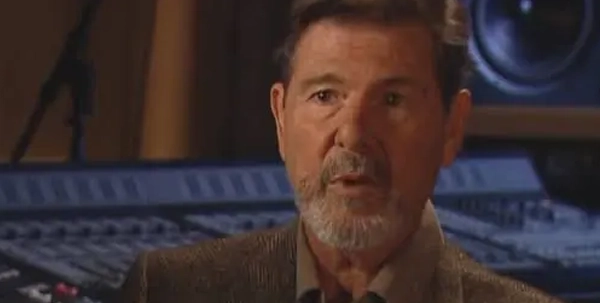
“It remains the signature piece of music to my career.” — Jerrold Immel on the Dallas theme
Dallas Theme Audio
Jerrold Immel worked on some of the most famous TV series of the 1970s and 1980s, including Dallas, Knots Landing, Gunsmoke, and Guns of Paradise. He also composed the much-loved Knots Landing theme. Below is a year-by-year collection of Dallas theme and closing variations, including the mini-series era, later seasonal changes, and the reunion movies.
Mini Series (1978)
| Track | Play | Download |
|---|---|---|
| Mini Series (1978) | Download | |
| 1978 Pilot Closing Theme | Download | |
| 1978 Theme | Download | |
| 1978 Closing Theme | Download | |
| 1978 Theme (mid-season variation) | Download | |
| 1978 Closing Theme (mid-season variation) | Download |
Themes by Year
| Year / Track | Play | Download |
|---|---|---|
| 1979 Theme | Download | |
| 1979 Closing Theme | Download | |
| 1980 Theme | Download | |
| 1980 Closing theme | Download | |
| 1981 Theme | Download | |
| 1981 Closing Theme | Download | |
| 1982 Theme | Download | |
| 1982 Ending Theme | Download | |
| 1983 Theme | Download | |
| 1983 Closing Theme | Download | |
| 1984 Theme | Download | |
| 1984 Closing Theme | Download | |
| 1984 Theme (mid-season variation) | Download | |
| 1984 Closing (mid-season variation) | Download | |
| 1985 Theme | Download | |
| 1985 Closing Theme | Download | |
| 1986 Theme | Download | |
| 1987 Theme | Download | |
| 1988 Theme | Download | |
| 1988 Theme (mid-season variation) | Download | |
| 1989 Theme | Download | |
| 1989 Theme (mid-season variation) | Download | |
| 1989 Theme (mid-season variation 2) | Download | |
| 1989 Closing | Download | |
| 1990 Theme | Download | |
| 1990 theme variation | Download | |
| 1990 Closing theme | Download | |
| 1991 Last episode closing | Download | |
| 1996 JR Returns Opening | Download | |
| 1998 War of the Ewings Theme | Download |
Interview Q&A
Career background
Interviewer: For those unfamiliar with who you are, can you give us some background?
Jerrold Immel: I'm a composer of film scores and themes, primarily TV in the 1970's, 1980's and 1990's (1971 through 1997).
Interviewer: Do you play any instruments yourself (also ever played any on your scores)?
Jerrold Immel: I never performed on any scores. In the 1950's and 1960's I played bassoon and contra-bassoon at UCLA. Played sax, (primarily alto), clarinet and flute with Los Angeles area big bands and jazz groups.
Interviewer: What made you decide to get into scoring to film and television?
Jerrold Immel: In November 1962, I was hired as an assistant music librarian at Four Star Television, a thriving independent TV production company. One year later I became a music librarian/copyist for CBS Television. During the next ten years, I worked in both the Film and Record Industries as a copyist and arranger. Composing opportunities at CBS (individual cues) began in 1971.
Dallas
Interviewer: How did you get involved with the long-running, popular series "Dallas"?
Jerrold Immel: At the time I didn't know I was being considered. What I learned later was that the night prior to the Lorimar meeting to discuss composers for the "Dallas" Pilot/Mini-Series, David Jacobs, the writer and creator of "Dallas", had seen a MOW entitled "Nowhere to Run". "Nowhere to Run", starring David Jannsen had a complicated plot dealing with high stakes gambling, an airline hijacking and secretive dealings, both personal and in business. David Jacobs (who had not met me at the time) loved the score I had done for the film and went into the meeting convinced that I should be the composer for "Dallas". Leonard Katzman, who produced "Dallas" and was a producer on the "Gunsmoke" series in 1972 (my first season) also vouched for me.
Interviewer: "Dallas" came at the tail end of a TV scoring era where shows frequently had funky themes; what made you use the funky backbeats with the traditional sounding theme over it?
Jerrold Immel: "Dallas" was conceived as a unification of the rural vastness of Texas ("Giant") and the urban drive and energy of the Ewing family. Thus, the western elements combined originally with "Disco", the pop music of the late 1970's.
Interviewer: Was there ever any pressure to arrange the theme into a more regular orchestral way, once shows like "Dynasty" and "Falcon Crest" themes started reigning in a new TV show theme era?
Jerrold Immel: No. "Dallas" was the original of the Prime Time Soaps (discounting "Peyton Place") of that era. The number one TV series in the world in 1980 and no one had any thought of making changes. In later seasons I did modify the Disco beat to make it more "contemporary dance".
Interviewer: Your theme has become one of the quintessential pieces of music from any TV series theme; how do you feel being remembered all these years later for that work, and do you still get comments from fans on it?
Jerrold Immel: It remains the signature piece of music to my career. Many, many people of a certain age remember the Friday nights on CBS and the theme that called them to watch the show.
Interviewer: An interview with you for The Film Music Society has you stating you were fired three times from "Dallas". Could you talk a little about that, and how you managed to get re-hired the two times?
Jerrold Immel: In hindsight it seemed that there was an executive producer who disliked certain instruments I chose to feature in certain episodes. I promised not to use the instruments in future scores.
Interviewer: How did you manage to score the "Dallas" reunion movies after being fired three times?
Jerrold Immel: The producer who had taken exception to my orchestrational choices was not involved in "Dallas" movies and to my knowledge no other composer was considered.
Knots Landing
Interviewer: Once again you found yourself working on another long-running and popular TV series, "Knots Landing", scoring the pilot and going (as far as I can tell) to season 10. How did you come to be involved with the series?
Jerrold Immel: "Knots Landing" was written and produced by David Jacobs. David Jacobs and I had formed a great working relationship in the year following the "Dallas" pilot and mini-series. "Knots Landing" was the third collaboration in a working relationship that lasted until my retirement in 1997.
Interviewer: You co-scored some episodes with Craig Huxley. How did you two meet, and what was the process like?
Jerrold Immel: I originally knew Craig Huxley in the 1970's as a fine keyboard session performer and someone who was a pioneer in synthesizers and sampling instruments (Synclavier). I worked with him extensively on the feature film "Megaforce" in 1982 blending Synclavier with traditional scoring. When "Knots Landing" producers, in the late 1980's, wanted to reshape the series using electronic music to make the show edgier and more contemporary I formed a partnership with Craig and we scored several episodes per season using the Synclavier. I continued to record the "Knots Landing" theme each season, using an orchestra and featuring an alto sax, to the end of the series (1993?). When "Knots Landing" had a reunion 4 hour mini-series, I recorded the title theme using an orchestra with alto sax. The entire underscore was then done on Synclavier.
Dynasty / Falcon Crest era context
Interviewer: Was there ever any pressure to arrange the Dallas theme differently once shows like "Dynasty" and "Falcon Crest" started defining a newer prime-time soap sound?
Jerrold Immel: No. "Dallas" was already established as the original of that era’s prime-time soaps, and later changes were limited to updating the rhythm to a more contemporary dance feel rather than rethinking the core theme.
Summary
- Jerrold Immel was chosen for Dallas with support from creator David Jacobs and producer Leonard Katzman.
- The Dallas theme intentionally combined a western feel with late-1970s disco energy to reflect both Texas scale and Ewing ambition.
- Immel considered the Dallas theme the signature work of his career and remained closely identified with it for decades.
- He also shaped the sound of Knots Landing, creating a contrasting lyrical theme and later adapting the show’s underscore to electronic textures.
- The audio archive on this page documents how the Dallas theme evolved across the original run and the reunion movies.