
Cliff Barnes
Ambitious, relentless, and driven by a lifetime of rivalry — the turbulent life of Cliff Barnes.
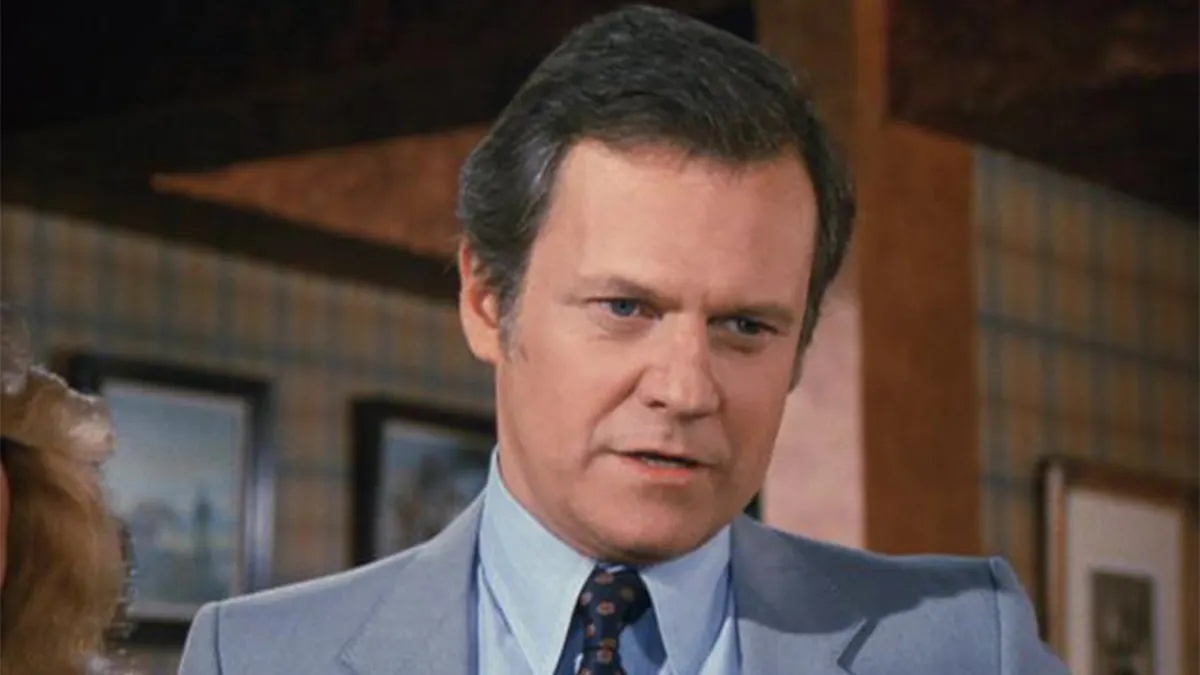
“All my life I've had to fight the Ewings. And one day, I'm going to beat them.” — Cliff Barnes
Early Life and Ambition
Cliff Barnes is a brilliant yet deeply conflicted figure whose life has been shaped by ambition, heartbreak, rivalry, and an unrelenting drive to succeed. After graduating with honors and earning a scholarship to the University of Texas Law School, Cliff began his career as a legal assistant at a prestigious Dallas law firm. There, he fell in love with Jenny Ames, a determined young secretary saving for law school. Their future together seemed full of promise until tragedy struck: when Jenny became pregnant, she chose to pursue an illegal abortion due to Texas law at the time. Severe complications led to her death, leaving Cliff emotionally shattered and withdrawn from relationships for nearly a decade.
Throwing himself into his work, Cliff left the safety of corporate law to enter public service, building a formidable reputation as a state investigator targeting corruption within independent oil companies—often placing the powerful Ewing Oil in his crosshairs. In 1978, he ran for the U.S. Senate on an environmentally focused platform aimed at protecting Texas’s mineral and wildlife resources from destructive drilling practices. Though leading in the polls, his campaign was derailed when J.R. Ewing publicly exposed the Jenny Ames tragedy in a damaging light, costing Cliff the election.
Sue Ellen and the Growing Conflict with the Ewings
During the campaign, Cliff began a passionate affair with Sue Ellen Ewing, J.R.’s unhappy wife. Believing her unborn child was his, Cliff planned a future with her, only to be blackmailed by J.R. into backing off. Soon after, Cliff resumed his investigation into Ewing Oil with help from Julie Grey, J.R.’s former secretary—only to find her murdered and himself framed for the crime. With Bobby Ewing’s help, Cliff was cleared when the real killers, Jeb Ames and Willie Joe Garr, were arrested.
Cliff’s career surged when he was appointed Chief of the Office of Land Management, where he wielded enormous power over oil drilling permits. Determined to combat what he saw as J.R.’s widespread corruption—blackmail, political bribery, and exploitation of ranchers—Cliff aggressively restricted Ewing Oil’s operations. Meanwhile, he watched helplessly as Sue Ellen was confined to Southfork, struggled with alcoholism, and was later committed to a sanitarium. When her son, John Ross Ewing III, was born, Cliff became even more resolved to defeat J.R.
Politics, Betrayal, and Prosecution
Named Dallas Civic Group’s “Man of the Year” in 1979, Cliff stepped down from the OLM to run for Congress, appointing young lawyer Alan Beam as his campaign head—only to discover Beam was secretly working for J.R., who had financed the campaign to lure Cliff out of power before withdrawing support. Forced to drop out, Cliff soon accepted a position as Assistant District Attorney, where he pursued a decades-old murder case against Jock Ewing. The investigation backfired when Cliff’s father, Digger, confessed on his deathbed to killing Hutch McKinney after discovering an affair with his wife Rebecca.
Cliff endured further turmoil when he was arrested for the attempted murder of J.R.—charges that were eventually dropped but destroyed his career at the D.A.’s office. A brighter chapter followed when Donna Culver, widow of former Governor Sam Culver, helped him secure a role as legislative counsel during her stepson Dave Culver’s Senate campaign. Their romance ended painfully when Donna deemed Cliff better suited as a “second man” and left him for Ray Krebbs.
The Wentworth Alliance
Reconciliation with his estranged, powerful mother, Rebecca Wentworth, brought both emotional comfort and professional opportunity. Around this time, Cliff became involved with singer Afton Cooper, J.R.’s former mistress, forming a complicated but meaningful relationship. Yet controversy continued to follow him—he discovered Kristin Shepard’s body at Southfork and was briefly suspected of murder before the death was ruled accidental.
When Dallas opportunities dried up, Rebecca offered Cliff the presidency of Wentworth Tool & Die, where he excelled. In a strategic coup, he forced J.R. to trade the valuable Ewing 6 oil field—renamed Barnes-Wentworth #1—for a critical loan extension. Still in love with Sue Ellen after her divorce, Cliff pursued her again while keeping Afton close, eventually confessing the truth to Afton, who chose to wait for him.
Financial Collapse and Recovery
Granted full autonomy at Wentworth Tool & Die, Cliff entered a high-stakes oil venture with Marilee Stone, investing millions—against warnings—only to be tricked by J.R. into buying a dry well with falsified geological reports. Financial ruin followed. Desperate, Cliff sold Barnes-Wentworth #1 back to J.R., lost Sue Ellen, his job, and his mother’s respect, and attempted suicide before ultimately recovering.
He later joined Stonehurst Oil as Senior Vice President before Rebecca pushed him into leading the newly formed Barnes-Wentworth Oil Company. His first major success came with the acquisition of Al Thurman’s refinery, thwarting J.R. once again. Yet personal heartbreak persisted: he attended J.R. and Sue Ellen’s wedding despite Afton’s objections, leaving mid-ceremony in anguish.
Inheritance and Power
Cliff’s corporate ascent was interrupted when he learned Afton had sacrificed herself to secure a refinery deal for him. Devastated, he spiraled into a drinking binge just as Rebecca died in a plane crash while finalizing the acquisition. Overcome with guilt yet ultimately comforted by her forgiveness, Cliff inherited Barnes-Wentworth Oil and a third of Wentworth Industries.
Honored as “Oil Man of the Year” in 1983 for developing the Tundra Torque drill bit, Cliff established the Willard Barnes Memorial Scholarship at SMU and publicly recounted how Jock Ewing had swindled his father—sparking a brawl with the Ewings. He continued outmaneuvering Ewing Oil using insider intelligence from a secretary named Sly, though a risky offshore lease—Gold Canyon 340—nearly destroyed him when J.R. secretly orchestrated the deal. After frantic drilling, Cliff struck the largest oil find in Gulf history, transforming him from millionaire to billionaire.
Marriage, Loss, and Family Turmoil
Despite this triumph, Afton left him, and he was arrested—then cleared—in the shooting of Bobby Ewing when his sister Katherine was revealed as the attacker. Cliff soon married Jamie Ewing, united by their mutual hatred of J.R., but their lawsuit for a share of Ewing Oil failed after Jamie’s brother produced evidence nullifying their claim. Their marriage deteriorated further when Jamie caught Cliff kissing April Stevens while he attempted to acquire additional shares. Jamie left Dallas after billing him $2 million for consulting work and later died in a mountain climbing accident in Mexico. Still legally married, Cliff inherited her 10% stake in Ewing Oil—only for the company to be shut down by the Justice Department over ties to terrorist B.D. Calhoun, though Cliff received a substantial payout.
Later Years
Another devastating blow came when his sister Pamela survived a fiery car crash but disappeared from Dallas after extensive surgeries, unwilling to burden her family. Cliff later funded a drilling project for Harrison “Dandy” Dandrige, discovering one of Texas’s largest gas deposits, but was forced into a tense stock deal with J.R. to secure pipeline access—an ordeal that led to tranquilizer dependency before he ultimately sold the field and stock to Jeremy Wendell.
After learning Pamela might still be alive, Cliff searched for her with April Stevens, only to find she had built a new life and chose not to return. Seeking closure, Cliff sold Barnes-Wentworth to Bobby Ewing and accepted a partnership in the re-formed Ewing Oil, much to J.R.’s fury.
Afton eventually returned to Dallas with a young daughter, prompting Cliff to question whether he was the child’s father—especially after discovering the girl had been tested for neurofibromatosis, the genetic condition Cliff carried. When Afton learned he was investigating, she fled with the child. Though Cliff tracked them down through Afton’s ex-husband Harrison Van Buren in Louisiana, a staged conversation convinced him that Harrison—not Cliff—was the father.
The Revival Era (2012–2014)
When the Ewings returned to Dallas, Cliff Barnes returned with them—older, wealthier, and no less dangerous. The rivalry that had shaped his entire adult life still burned hot beneath the surface, but now it had evolved into something colder and more methodical. Cliff had learned, over the years, that power did not always need a fist on the table. Sometimes it only needed patience, a good lawyer, and the willingness to do what other men could not live with.
By this time Cliff’s life had taken on a new center of gravity: his daughter, Pamela. She was grown, ambitious, and beautiful—very much a Barnes in will and fire—and her presence in Dallas complicated everything. Pamela became entwined with the Ewing world through John Ross, and Cliff, who had spent a lifetime plotting against that family, now found himself facing a truth that unsettled him: his daughter’s heart was pulling her toward the very bloodline he had sworn to destroy.
Yet the most personal Barnes story in the revival years did not begin with Pamela at all. It began with Pamela Barnes Ewing—Cliff’s sister. For years, her disappearance had been a wound that never truly healed, not for Cliff, not for the Barnes name, and certainly not for Christopher Ewing, the son she had raised and loved as her own. When the truth finally surfaced, it was brutal in its simplicity: Pam had not vanished into legend. She had died—quietly, away from Dallas—after learning she had pancreatic cancer.
And Cliff, when he discovered it, made a choice that revealed the darkest edge of his nature. He understood immediately what her death meant on paper: her Wentworth holdings, her shares, her legacy—assets that would pass out of his control and into Christopher’s hands. So Cliff did what Cliff had always done when cornered by fate: he tried to outmaneuver it. He contacted the doctor and the nurse who had been with Pam at the end, and he kept her death secret, ensuring that her shares remained under his influence instead of transferring cleanly to Christopher.
It did not last. The lie could not hold forever—not in a family built on secrets and the damage they cause. Christopher learned the truth, not from Cliff, but through the paper trail Cliff had tried to bury: Pam’s will, and the letter she had left behind. The revelation was devastating. It was not simply that Pam was gone. It was that Cliff—her brother—had treated her death like a business move.
At the same time, J.R. Ewing’s shadow still stretched over everyone, even as his health failed. J.R., dying of cancer, engineered one final scheme—one last “masterpiece”—and, in true Ewing fashion, he made it personal. The plan ended with Cliff Barnes framed for J.R.’s death, a final cruelty delivered from beyond the grave. Cliff, who had spent his whole life trying to defeat J.R., found himself trapped inside the kind of trap J.R. always built best: the kind that made the world believe the worst of you because you had spent years proving you were capable of it.
The result was the ultimate humiliation: Cliff Barnes in prison, paying not only for what he had done, but for what J.R. had convinced the world he had done. Even there, Cliff remained Cliff—furious, calculating, refusing to accept that this was how his story would end. But the revival years made something painfully clear: the war with the Ewings had cost him more than money, more than reputation, more than time. It cost him family. It cost him the last scraps of innocence he might once have had. And it left him, at the end, staring at the ruins and realizing he had helped light the match.
Legacy
Marked by relentless battles, personal loss, staggering victories, and a lifelong rivalry with the Ewings, Cliff Barnes remains a towering presence in the Texas oil world—a man driven by justice, haunted by the past, and defined by resilience in the face of extraordinary adversity.
Cliff Barnes vs J.R. — The Greatest Rivalry in Dallas History
Few rivalries in television history have burned as long—or as fiercely—as the war between Cliff Barnes and J.R. Ewing. It was not merely a business feud, nor simply a clash of personalities. It was a battle born of legacy, family wounds, and a generational hatred that neither man could ever truly escape.
The origins of the conflict stretched back decades to the bitter relationship between their fathers, Digger Barnes and Jock Ewing. Each believed the other had cheated him out of oil, fortune, and destiny. Their sons inherited that resentment almost as a birthright, growing into adulthood convinced that defeating the other was not just ambition—it was justice.
Where J.R. was instinctive, ruthless, and charmingly corrupt, Cliff saw himself as the moral counterweight—a man fighting for fairness in an industry dominated by power brokers. Yet the longer their war continued, the more the lines blurred. Cliff learned to scheme. J.R. learned to strike preemptively. Each became, in many ways, a reflection of the other.
Their battles played out everywhere: in courtrooms, corporate boardrooms, political campaigns, and the oil fields of Texas. Elections were sabotaged, fortunes were destroyed, companies stolen, and reputations shattered. At times Cliff seemed poised to win—striking the largest oil find in Gulf history, building Barnes-Wentworth into a powerhouse, and even forcing J.R. into defensive positions few thought possible.
But J.R. possessed an almost supernatural ability to survive. Again and again he outmaneuvered Cliff, often using Cliff’s own determination against him. The rivalry became less about oil and more about identity. Without J.R., who was Cliff Barnes? And without Cliff, whom would J.R. need to conquer?
In the end, even death did not end the war. J.R.’s final scheme ensured that Cliff would take the fall for his murder, a last, devastating move in a chess match that had lasted a lifetime. It was both a victory and a confession from J.R.—proof that no adversary had ever mattered more to him than Cliff Barnes.
Their struggle defined an era of Dallas. Two brilliant, stubborn men, each convinced he was right, locked in a conflict that consumed marriages, families, and fortunes. Love them or hate them, the truth is undeniable: the story of Dallas cannot be told without the story of Cliff Barnes and J.R. Ewing.
Cliff Barnes FAQ — Most Asked Questions
Who played Cliff Barnes in Dallas?
Cliff Barnes was portrayed by Ken Kercheval, whose nuanced performance helped transform Cliff into one of television’s most complex antagonists—part rival, part tragic figure, and always driven by the need to prove himself.
Why did Cliff Barnes hate the Ewings?
The hatred was inherited. Cliff grew up believing that Jock Ewing had cheated his father, Digger Barnes, out of valuable oil fields. What began as a family grievance evolved into a lifelong obsession with defeating the Ewing empire.
Was Cliff Barnes richer than J.R.?
At several points, particularly after striking a massive Gulf oil reserve, Cliff surpassed J.R. financially and briefly became one of the most powerful oilmen in Texas. However, wealth never settled their rivalry—power shifted constantly between them.
Did Cliff Barnes ever win against J.R.?
Cliff achieved important victories in business and politics, but lasting triumph over J.R. proved elusive. Even in death, J.R. managed one final move that sent Cliff to prison, underscoring how evenly matched—and inseparably linked—the two men truly were.
What happened to Cliff Barnes in the Dallas revival?
In the continuation, Cliff returned as a powerful but increasingly isolated figure. After secretly concealing his sister Pamela’s death to retain control of her shares, he became entangled in J.R.’s final scheme and was ultimately imprisoned for J.R.’s murder.
Did Cliff Barnes have children?
Yes. Cliff had a daughter named Pamela Rebecca Barnes, often called Rebecca or Pamela. Intelligent and ambitious like her father, she became deeply involved in the Ewing world, further intertwining the two families’ destinies.
Was Cliff Barnes a villain or a victim?
Cliff was both. He often saw himself as a crusader against corruption, yet his relentless pursuit of victory sometimes pushed him toward the very tactics he despised. That moral tension is what made him one of Dallas’s most compelling characters.
Is Cliff Barnes alive at the end of Dallas?
Cliff survives but ends the saga behind bars—defiant, unbroken, and still carrying the bitterness of a lifetime spent fighting the Ewings.